
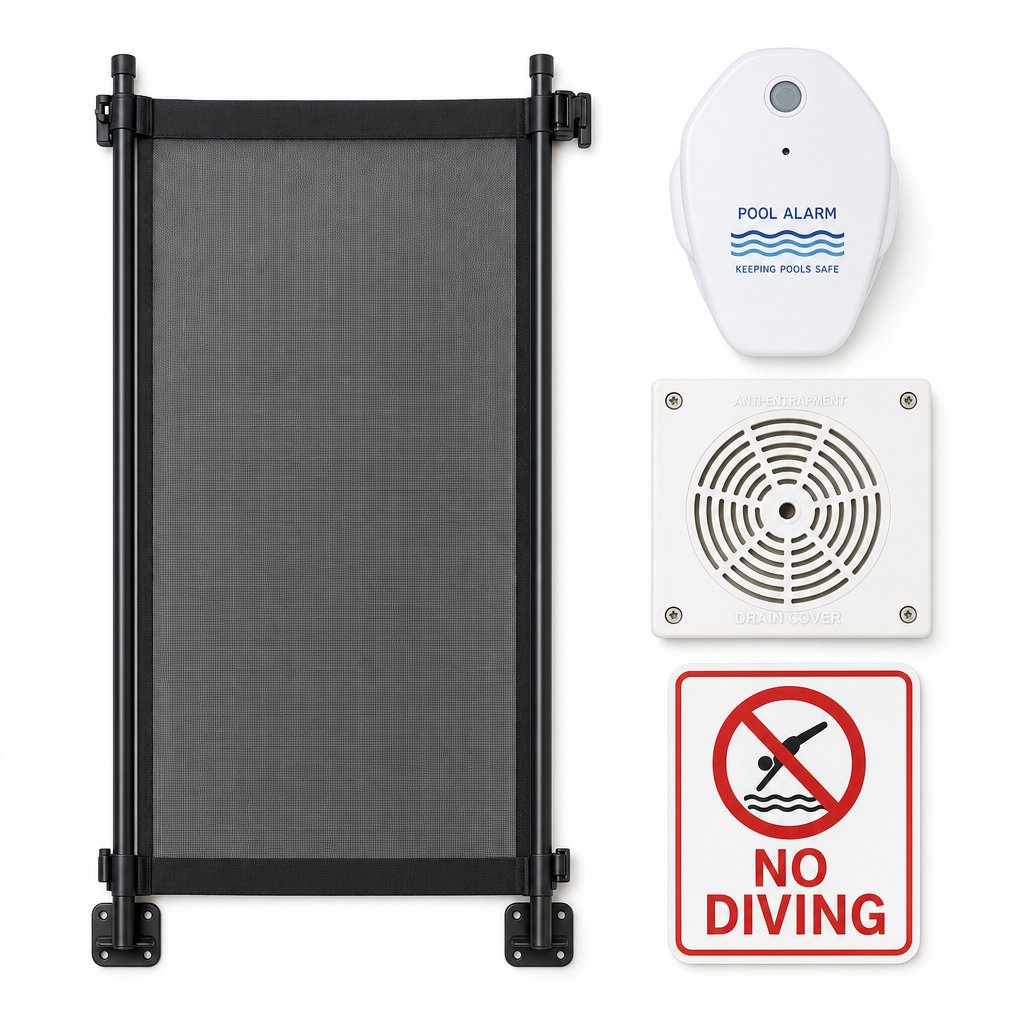
Pool safety isn't just good practice — in Florida, it's the law. Understanding the requirements and best practices protects your family, your guests, and your liability.
Florida Pool Barrier Law (Florida Building Code, Chapter 4)
Florida requires specific safety barriers for residential pools:
Fence requirements:
- Minimum 4 feet in height
- No climbable features (horizontal bars, decorative elements that aid climbing)
- Self-closing, self-latching gates that open outward (away from the pool)
- Latches must be at least 54 inches above the bottom of the gate or on the pool side with a protective barrier
- No gaps larger than 4 inches between vertical slats
- No gaps larger than 2 inches at the bottom
Alternative barriers (you only need one, not all):
- Pool cover meeting ASTM F1346 standard
- Alarm on all doors/windows with direct pool access
- Self-latching devices on pool access doors at 54+ inches height
- Pool alarm (surface wave or subsurface)
Important: If you're buying an existing home with a pool, the seller is not required to bring the pool up to current code. The barrier requirements apply to new construction and major renovations. But from a liability standpoint, having proper barriers is essential regardless of when the pool was built.
Drain Cover Requirements
Pool drain covers are critical for preventing entrapment injuries. Florida follows the Virginia Graeme Baker (VGB) Pool and Spa Safety Act, which requires:
- Dual drain covers on all pools built after November 19, 2008
- Unblockable drain covers that meet current safety standards
- Regular inspection of drain covers for damage or wear
If your pool has a single drain or old-style drain covers, this is a safety issue that should be addressed immediately. Drain entrapment is rare but can be fatal, especially for children.
Essential Safety Practices
Supervision. Never leave children unattended near the pool. Drowning is silent and fast — it doesn't look like the movies. A child can drown in 2–3 inches of water in under 30 seconds.
Swimming lessons. Florida recommends swimming lessons starting at age 1. Even strong swimmers can drown due to cramps, exhaustion, or sudden illness.
Emergency preparedness. Keep a phone poolside. Know CPR. Have a first aid kit accessible. In a drowning emergency, every second counts.
Pool alarms. Consider a pool alarm even if you have a fence. Surface wave alarms detect unauthorized entry. Subsurface alarms detect movement in the water.
Chemical safety. Store pool chemicals securely, away from children and pets. Never mix chemicals together — some combinations create toxic gases or explosions.
Electrical safety. Keep all electrical devices (speakers, lights, chargers) at least 10 feet from the pool. Use GFCI-protected outlets. Never use electrical devices while in the water.
Tampa Bay Specific Safety Considerations
Lightning. Florida is the lightning capital of the US. Have a clear lightning policy: if you hear thunder, get out of the pool and stay out for 30 minutes after the last thunder.
Strong winds. Tampa's afternoon thunderstorms can produce sudden, strong winds. Secure loose pool furniture and covers before storms hit.
Alligators. While rare in residential pools, alligators have been found in Florida pools, especially in areas near natural waterways. Keep pool areas well-lit at night and secure any access points.
Hurricane safety. Before a storm, secure all pool equipment, remove loose items, and consider draining the pool if flooding is expected. After a storm, test water chemistry before allowing anyone to swim.
Insurance Considerations
Most homeowner's insurance policies in Florida include pool liability coverage, but:
- Check your deductible. Pool-related claims often have higher deductibles.
- Umbrella policy. Consider an umbrella policy for additional liability protection, especially if you have a pool.
- Safety features may reduce premiums. Some insurers offer discounts for pool alarms, proper fencing, or safety covers.
The Bottom Line
Pool safety is about layers. No single measure is sufficient on its own. The combination of barriers, alarms, supervision, education, and emergency preparedness creates a safety system that dramatically reduces risk.
For Tampa Bay pool owners, the climate means your pool is a year-round attraction. That makes safety even more important — the more you use your pool, the more opportunities there are for accidents. Invest in safety now, before an accident happens.