
Hurricane season in Tampa Bay (June 1 – November 30) is not a matter of "if" but "when." Your pool is one of the most vulnerable parts of your property during a storm, and proper preparation can mean the difference between a quick recovery and thousands in damage.
Before Hurricane Season (March–May)
Secure all loose items. Pool furniture, umbrellas, decorations, and equipment that can become projectiles in high winds need to be secured or stored. High winds can turn a patio chair into a missile.
Inspect your pool cover. If you use a safety cover or debris cover, inspect it for tears, weak points, and proper securement. A damaged cover lets in debris and can be torn off in high winds.
Check equipment anchoring. Verify that all pool equipment (pump, filter, heater, salt system) is properly secured. Equipment that isn't bolted down can shift, tip, or be damaged by debris.
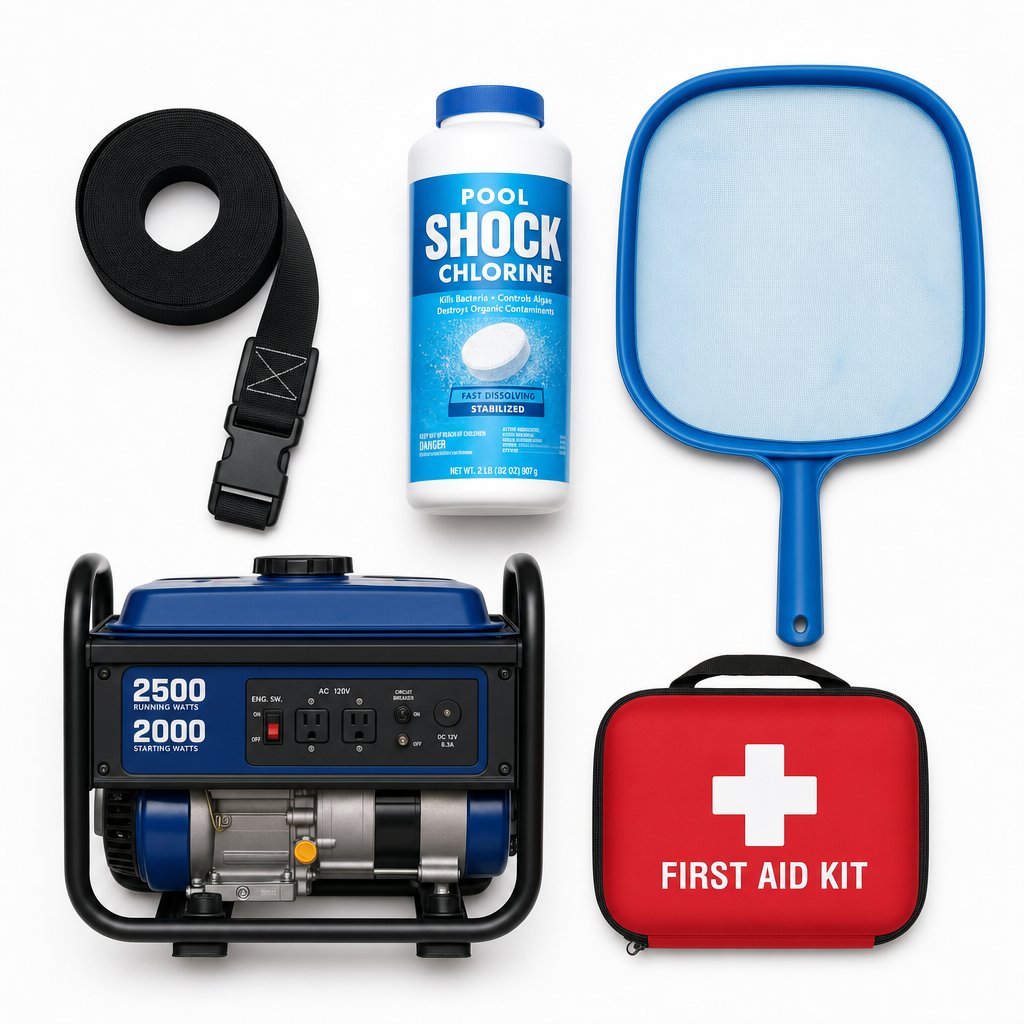
Test your generator. If you have a generator for power outages, test it now. You'll want to run your pump during and after a storm to prevent water stagnation and equipment damage.
Review your insurance. Make sure your homeowner's policy covers pool damage. Some policies have specific exclusions or limited coverage for water-related damage.
48 Hours Before a Storm
Raise the water level. Fill your pool to 1–2 inches above the normal level. This prevents the pool shell from popping out of the ground due to hydrostatic pressure from rising groundwater.
Secure the cover. If you have a pool cover, secure it as tightly as possible. Use additional straps or weights if needed. A cover that flaps in the wind can tear.
Shut down the equipment. Turn off the pump, heater, and salt system. Disconnect power at the breaker. Do not leave equipment running during a storm.
Remove chemicals. If possible, remove chlorine tablets from the auto-feeder to prevent over-chlorination during the storm. Store chemicals in a secure, dry location.
Secure pool accessories. Remove ladders, diving boards, pool covers (if not permanently installed), and any other accessories that could be damaged or become hazards.
During the Storm
Stay out of the pool area. High winds, flying debris, and electrical hazards make the pool area dangerous during a storm.
Do not attempt to secure the pool. If the storm is imminent, do not go outside to try to secure pool equipment or covers. Your safety comes first.
If flooding is expected: If your area is prone to flooding, the elevated water level you set beforehand will help prevent the pool from floating out of the ground. Do not drain the pool — the hydrostatic pressure issue is more dangerous than flood damage to the pool itself.
After the Storm
Wait for official all-clear. Do not approach the pool area until authorities declare it safe. Downed power lines, structural damage, and contaminated water are real hazards.
Inspect for damage. Check the pool shell for cracks, check equipment for physical damage, inspect the surrounding deck for damage that could affect pool safety.
Test water chemistry immediately. Storm water is contaminated with debris, bacteria, and chemicals. Test pH, chlorine, alkalinity, and stabilizer before allowing anyone to swim.
Shock the pool. Even if the water looks clear, shock it heavily to kill bacteria and break down organic contaminants. Use 2–3x the normal shock dose.
Clean the filter. Storm debris clogs filters rapidly. Clean or backwash the filter immediately, then run it continuously for 24–48 hours.
Check equipment. Inspect the pump, filter, heater, and salt system for damage before turning them back on. Look for cracked housings, damaged wiring, or displaced components.
Run the pump continuously. Keep the pump running 24/7 for at least 48 hours after the storm to circulate and filter the water. This prevents stagnation and helps distribute chemicals.
Test again before swimming. After 24–48 hours of continuous filtration and shocking, test the water again. Wait until chlorine is in the safe range (1–3 ppm) and pH is balanced before allowing anyone to swim.
Post-Storm Chemical Considerations
Rainwater dilution. Tropical storms dump enormous volumes of fresh rainwater, diluting all your chemicals. You'll need to re-establish proper chemical levels, which can mean significant chemical costs.
Organic load. Leaves, dirt, and debris create a massive organic load that consumes chlorine. Expect to shock repeatedly over several days.
Stabilizer spike. If you use stabilized chlorine tabs, the rainwater dilution followed by re-shocking can cause stabilizer to spike. Test stabilizer after recovery and be prepared to partially drain if it exceeds 50 ppm.
Iron and metals. Storm water can introduce iron and other metals from roofing, gutters, and surrounding soil. If your water turns brown or orange after the storm, you may need a metal remover treatment.
The Cost of Preparation vs. Recovery
Preparation costs: $0–$200 (securing items, inspecting cover, testing generator)
Recovery costs (without preparation): $500–$2,000+ in chemicals, water replacement, equipment repairs, and professional service calls
Recovery costs (with preparation): $200–$500 in chemicals and basic maintenance
The difference is staggering. Two hours of preparation before hurricane season can save you $1,000–$1,500 in post-storm recovery.